2 Great Fantasy Players Returning From Injury This Month

Two young players are scheduled to return to their teams sometime this month after early-season injuries.

The good thing about each of these players is that their team’s have vastly underperformed this season, so they will most likely be quickly reintegrated back into the fold.

(1) Nenad Krstic (NJ)
Injury: Left knee rehab
Out Since: Nov 21, 2007
06-07: 16 points, 7 boards, 2 assists, 1 block, 53% FG%
When to expect him back: mid-to-late January

This 24 year-old, 7 footer is a really talented offensive player. He told the NY Post on December 31st that he “feel(s) really good” and hasn’t seen any swelling in his knee. Although his timetable for return is still up in the air–the team is extra cautious since he has already hurt himself by trying to come back from the same injury too fast before–he’s been doing a lot of conditioning, including full-court drills and “basketball” stuff. Definitely an all-star caliber player when he’s at his best, Krstic’s large reach could really help the Nets’ weak interior.

Nenad should be a great NBA player for a long time if he can sufficiently recover from this injury. The Serbian has good range, good instincts around the rim and has improved in points, boards, assists, blocks, FG% and minutes in each of his first 3 years in the league. Look for him to give the Nets a much needed boost in the second-half of the season.


(2) Randy Foye (Minn)
Injury: Stress Fracture in left kneecap
Out Since: Oct 31, 2007 (all season)
06-07: 10 points, 3 assists, 3 boards, about 1 steal and 1 three, 85% FT% in only 23 minutes
When to expect him back: mid January or sooner
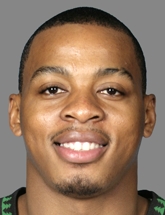
Foye became the go-to guy for the Wolves late last season and hasn’t played a lick all season because of a stress fracture. The St. Paul Pioneer Press reports the point guard is going to have his injured left knee re-examined on January 7th. During his last examination the doctor’s pushed his timetable for return back a bit, but Wolves Head Coach Randy Wittman says this time he should be “cleared to go (because) he has no pain or anything.”

I’m particularly optimistic about Foye because the Wolves are lacking depth at the point guard position. In his rookie campaign last year, Foye was very effective in limited action, so if he’s anywhere near full recovery from his injury, expect him to get a lot of minutes and a pretty good statline for a depleted Minnesota team.

Get more articles like this by subscribing to The Trading Block’s RSS Feed.

To hoops,
Farid

Tip 5: Don’t Pick up a Player that is Strong in a Category Your Team Can Never Win

It has finally arrived, the final of five articles that discusses what any fantasy basketball manager should do before picking up a free agent!

Here are the previous 4 tips: one | two | three | four

(5) Avoid picking up a player that is strong in categories you absolutely cannot win (a tip for H2H leagues)

In a standard Yahoo Fantasy Basketball H2H league, there are 9 categories: FG%, FT%, 3PTM, Points, Assists, Rebounds, Steals, Blocks and Turnovers. There are also 20+ weeks of play if the league starts with the beginning of the NBA. What this means is that there are plenty of opportunities to accumulate “wins” throughout the season. In other words, a manager need not be concerned with winning every category each week to do well. In fact, the most efficient managers will only be concerned with improving categories that they have a chance in (and might actually win on a week-to-week basis) and forget about those in which they are obviously weak. This is something I would recommend every H2H manager do.

Let me illustrate the dilemma with an example:
(1) If a team finishes 6-3 every week for 20 weeks…
it will achieve a final record of 120-60.
(2) If a team finishes 10 weeks 8-1 and 10 weeks 3-6…
it will achieve a final record of 110-70.

What I’m trying to get at is this–if you can consistently win SIX categories across an entire H2H season, this is better than being able to dominate half of your opponents (most likely the weaker teams in your league), but be too-thinly spread out against 9 categories and lose to the other half (most likely the stronger managed teams in your league).

Therefore, when picking up a free agent, a manager should always be cognizant of his or her strengthens and improve on those, rather than fruitlessly attempt to improve in categories he or she will rarely win.

For example, if I am great in Points, Rebounds and Blocks; average in FG%, FT% and Steals; and poor in 3PTM, Assists and Turnovers, I would only want to add players that could improve my standing in those categories (P, Rb, Bl, FG, FT, Stl) and avoid adding players that would help me in 3s, Assists, and TO’s. Why?

  1. Ensures a team will be particularly strong and difficult to beat in certain categories
    See example above, if your team is unstoppable each week in 5-6 categories, you’re probably better off than a more well-rounded team that is spread too thin against tougher opponents.
  2. Lowers the amount of information a manager has to process before adding a player
    When a manager concedes a couple of categories each week in favor of dominating across many others, he reduces the amount of research and/or homework he needs to do before picking up a player. This almost certainly will improve a manger’s decision-making ability as he or she will only have to process so much information about a player before making a decision. For example: how does this addition affect these 6 categories? vs. how does this addition affect all 9 categories?
  3. A strong game by a player on your team will always have an impact on the head-to-head matchup that week
    Don’t you hate it when its Saturday night and your team is down by 25 steals–and will obviously lose the Steals category–and a player on your team goes for 7 steals in a game? Sure the 7 steals represents an amazing performance, but does it actually affect the results at the end of the week? Not at all. By focusing only on players that will improve your performance in categories that you at least have a chance at winning, a manager ensures that he is not under-utilizing his roster space. Each roster position is valuable and part of the difficultly of being a manager is knowing who to place where and who to pick up as a free agent.

In conclusion, I just want to reiterate that strong fantasy managers are smart enough to realize that they will not win each head-to-head matchup 9-0. Instead, they look for competitive advantages across six-or-so categories and concede losses in others. This way they can focus on specific categories, become expert’s in those categories and win those categories. In my mind, this is the soundest H2H strategy around.

I hope you enjoyed the How to Pickup a Free Agent series. Let me know what you liked/disliked in the comments below!

To hoops,
Farid

Tip 4: Determine Why a Player is a Free Agent

This is the fourth installment of How to Pickup a Free Agent, which discusses what any competitive fantasy basketball manager should do before picking up a free agent.

Here are the previous three:
(1) Look at a free agent’s overall & season ranking
(2) Determine if the free agent is trending up or down
(3) Pick up free agent’s that will add value to your team

(4) Figure out why the player is a free agent

There are 156 unavailable, signed players in my H2H league (12 teams * 13 players/team). In contrast, there are over 350 available free agents (15 pages of 25 players each).

For the most part, a free agent is available because a league has determined that the player’s future predicted output (“fantasy statistics”) is not greater than the future predicted output of existing signed players. In this sense Fantasy Basketball “markets” are efficient. If a free agent’s future predicted fantasy stats are greater than that of an existing signed player, an add/drop transaction takes place.

Therefore, there is probably a good, if not decent, reason why a player is currently a free agent in your league. Let’s discuss some of the possible reasons (many of which are obvious).

Reasons why a player might be a free agent

  1. A player does not accumulate enough fantasy statistics
  2. A player is injured and his short-run, medium-run, or long-run fantasy scoring potential has been hindered
  3. A player’s future potential is severely affected by loss of minutes (return of a starter), a trade (moved to a new system), team problems (doesn’t get along with other players), league problems (suspension), or even personal/legal problems
  4. A player’s overachievements in certain categories are outweighed by glaring weaknesses
  5. A player is perceived to be on a down turn (see tip 2/5)

Now that we have an understanding as to why a player is typically a free agent, I have some tips for manager’s that seek to improve their eye-of-skepticism when looking at potential pickups.

How to evaluate a free agent

  1. Read all of the available news surrounding a player
    This involves at minimum reading the little post-it note that Yahoo places next to players. This will provide you with a cursory look at a player’s recent performance, injury updates and sometimes gives you recommendations as well.
    But, for more competitive managers, I recommend reading blogs, sports news sites and browsing fantasy basketball forums to gain a better idea of what might be going on with a particular player. An extremely valuable tip I once received was to consult team-specific sites, blogs, etc. for information on players, as these sites tend to cover individual players on the team better than generalist sites.
    Becoming an “expert” on a player doesn’t take more than 5 minutes and it alerts you to the valuable information on the player’s injury status, his recent minutes, his off-the-court problems, etc.
  2. Look at the free agent’s performance in his (i) last game, (ii) last week and (iii) last month
    See a downward trend? This should warn a manager to do additional research to determine if the player falls into one of the categories listed above. For example, a player may have lost his starting position when his teammate returned from injury.
  3. Determine the free agent’s weakness(es)
    Nearly every player would be a worthwhile acquisition if you could take only that player’s positive characteristics and leave his weaknesses behind. In general, big-men (F’s, PF’s and C’s) tend to have high FG%’s, Rebounds and Blocks, with low Three’s, FT%’s and Assists. On the other hand, guards (SF, SG, G, PGs) typically outperform in Three’s, FT%’s and Steals and are weak in Rebounding, Blocks and FG%. Although the acquisition of a certain free agent may be helpful in some categories, a manager should always make sure the player does not bring extreme weaknesses in other areas. What use is a player who was brought on to bring in Threes if he is a severely poor shooter (FG%, FT%) and turns the ball over excessively?

In conclusion, I can’t emphasize enough the amount of homework a competitive manager needs to do before he or she should make an acquisition. Whether it be scouting the player on Yahoo, a fantasy blog, etc., a manager should always be aware of the recent developments of a player he or she is thinking about picking up.

To hoops,
Farid

Free Yahoo Fantasy Basketball StatTracker!

I recently found two free Yahoo Fantasy Basketball Stat Trackers.

StatTracker is great because it allows you to receive real-time, up-to-the-minute updates on statistics and scores for your players, as well as compare this progress to that of other teams so you always know where you stand.

(1) Freebie Stats
Huge
props to David Lee for creating a free and fully-functional StatTracker for Yahoo Fantasy Basketball! As someone who has been looking for such a free feature, I was pleasantly surprised to have stumbled upon it. The script works through Firefox’s greasemonkey extension and can be utilized THROUGH the yahoo fantasy sports page.

David’s blog entry releasing the script

The actual script: Freebie Stats

(2) Fantasy Sports Live! (FSLive)
FSLive is a great free yahoo stat tracker. As opposed to the above script that allows you to view your stats within your league’s site, this stattracker is run through the FSLive website. The very nice thing about the FSLive client is that it allows you to view all your leagues (you are asked to give them your login information) and all your opponents within those leagues. You can find it here.

If you like what you are reading, please subscribe to The Trading Block’s RSS Feed.

To hoops,
Farid

Trailblazers 13 Game Winning Streak: The Facts

I don’t want to take anything away from the Portland Trailblazers, who are currently on a 13 game winning streak and have definitely been playing exceptionally, but the hater inside of me couldn’t resist writing this article. What I’ve concluded from my very basic research of the Blazers’ schedule the last 13 games and the standings of their opponents during that stretch is that Portland has not been playing difficult opponents.

The Figures

  1. The aggregate win-loss record of their opponents during the streak is 174-216, for a sub-par winning percentage of 44.6%.
  2. There are 30 teams in the National Basketball Association. If you rank them 1-30, with 30 being the worst, the average rank of team’s the Blazers have played the last 13 games is 18.2.
  3. This includes games against 4 out of the worst 5 teams in the league: Seattle (26), Memphis (28), Miami (29) and Minnesota (30). These teams have a combined win-loss record 29-90.
  4. During this stretch, they’ve only played 1 out of the top 8 teams in the entire league (New Orleans). This means they haven’t played Boston, Detroit, San Antonio, Phoenix, Orlando, the Los Angeles Lakers or Dallas during the winning streak.
  5. Out of the 13 games, only 3 of them were on the road. Their last 6 games have all been at home.

I’ll leave interpretation up to the rest of you, but the numbers speak for themselves.

Edit Dec 31, 2007
On New Years Eve, the Utah Jazz finally defeated the Portland Trail Blazers, ending their 13 game winning streak. This was due in large part to the 19 points and 9 boards from Carlos Boozer & the 18 points and 8 assists from Deron Williams. The Jazz certainly came ready play, hoping to avoid a third consecutive loss to the Blazers (during the Blazers’ streak, they had defeated the Jazz twice).

To hoops,
Farid

Tip 3: Pick up Free Agent’s that will Add Value to Your Team

There are certain things any fantasy basketball manager should do before picking up a free agent. This is the third of five installments. Here are the other two: one | two.

(3) Pick up free agent’s that will add value to your team
This is an important point that is often overlooked in the face of player rankings and the such. The job of a fantasy manager is similar to the job of a general manager in the sense that a fantasy manager should only add a player that will make his team better. This means that a fantasy owner should analyze his current team (read: look at the standings) and figure out what his team is weak in and what he needs to improve in. A skilled fantasy manager will not only win
a league, but score consistently across all categories.

You should pick up a free agent if he is:

  1. A free agent strong in categories that your team is weak in.
  2. A free agent strong in categories that an injured player on your team was strong in.
  3. A free agent exceptionally strong across many categories (not necessarily one’s you need).
  4. A free agent strong in categories that your opponent is strong in (only applicable to H2H leagues).

A free agent strong in categories that your team is weak in.
This should be an owner’s rationale for about 75% of his moves in a Rotisserie-scored league. Over time, a manager will notice weaknesses in his teams and it is his or her job to correct them. Here’s a simple example. About a month ago, I noticed in one of my Rotisserie-scored league’s that I was heavily trailing in rebounds and blocks. I also noticed I had a plethora of 3PTM and steals. Therefore, I made two strategic acquisitions–picking up free agent big men that were strong in rebounding and blocks–and two strategic drops–letting go two of my lesser-known reserves that had been supplementing my 3PTM and steals stats all year long. Simple pick-ups like this will vastly improve your team of the long run if you make it your goal as a manger to constantly be evaluating your team and its performance in all categories.

A free agent strong in categories that an injured player on your team was strong in.
Inevitably, throughout the course of a season, a player on your team will become injured. If your fortunate, this will only be for a short duration. If you are less fortunate, a player of yours might be out for a long stretch of time. As a fantasy manager, you don’t have time to sit around and mourn the loss of a fantasy player–especially a star fantasy player. In fact, you must act quickly to offset the loss felt by the injury by making a strategic free agent pickup. Ideally, a manager should attempt to replicate the player who was injured as best as possible so as to continue the stream of stats flowing into certain categories. For example, if Kevin Durant ends up being out for a while with his sprained left index finger, I will certainly need to compensate for his loss by picking up a player that is strong in points, blocks, steals and three-pointers. Obviously, this will be very hard to replicate completely, but by picking up a similar player, I at least ensure that my team–currently 2nd–will not fall drastically behind in any of the categories that Durant was single-handily carrying me in.

A free agent exceptionally strong across many categories (not necessarily one’s you need).
This is a no-brainer. If a good player happens to be on waivers or just collecting dust as a free agent, by all means, pick him up. The only reason I can imagine an exceptionally strong player being a free agent in the first place is if he is (i) coming off an injury or (ii) was dropped by an unexperienced fantasy manager. If this so happens, a fantasy manager should jump at the opportunity to pick him up. I like to make sure I am close to the top of the waiver list so that if a player like this does fall onto waivers, I have a better shot at picking him up.

A free agent strong in categories that your opponent is strong in (only applicable to H2H leagues).
In head to head Yahoo Fantasy Basketball leagues you have to pay closer attention to your roster, your performances and your future opponents on a week-to-week basis. Each week, on Sunday night, I like to evaluate my opponent for the next week by checking out that opponent’s stats, what that opponent is strong in, and how that opponent has been fairing as of recently. I typically do this by accessing the “head-to-head stats” tab on my league’s main page and then look at my opponents “win-loss” standings across each category, and sometimes even his totals. If you’re looking for a way to convert H2H league totals into Rotisserie-style standings: check out this tool here. After doing some research into my opponent, I then like to see where I may be at a disadvantage. If I see my opponent is strong in 3s and I’m average in 3s, and I believe that the addition of 1 free agent specializing in 3s would put me over the top, I typically make a move. At the same time, I must warn manager’s out there not to be greedy. If you are playing an opponent that you should beat 7-2 naturally, don’t compromise that very strong standing by making a move that will bring you down in crucial categories. Thus, the rule for H2H week-to-week pickups might be summarized as follows: make strategic acquisitions when you’ve done your research and you are positive the acquisition will help you win a category that week, but do not make superfluous changes that will only compromise your position in crucial categories.

If a fantasy manager cannot place his or her potential free agent into one of the four player categories listed above, the manager should really reconsider his or her rationale and whether the player being added is actually offering value to the team.

Share your thoughts with me below in the comments!

To hoops,
Farid

Maximum Games Played Per Position

The task
Taking a break from my series of posts on how to pick up a free agent (first, second), today I’m going to talk about a lesser known aspect of the Yahoo Fantasy Game–the Games Played Restriction.

The Maximum Games Played rule
In standard Yahoo Fantasy Basketball Rotisserie leagues, a manager is constrained by the number of games (82) he or she is allowed to play in each spot on his or her roster. This rule was designed to prevent managers from employing the well-known tactic of adding players when they are scheduled to play a lot of games and dropping them when they are not.

Implications
This means that if a manager exceeds the number of games played in a certain roster position–the PG position, for example–he or she stops accumulating stats for that position. Fortunately, a manager need not keep a running tally of how many games he plays because Yahoo Fantasy Basketball has a tool that summarizes this. A screenshot of this tool is shown below from one of my team’s. To get to this tool, simply look below your roster and find the series of links that begin with “Legend”. The “Maximum Games” link is the fourth in that row of links.

As you can see above, my team is projected to overshoot the allotted number of games in many categories, with the sole exceptions being the SG position and the C position. I am in particularly grave trouble in the Util category, where I am on pace to overshoot the allowed number of games by thirty-seven! Fantasy Basketblog has pointed out the “utility” (pun-intended) of keeping as many utility spots open as possible, as this will offer more flexibility for a manager at the end of the year.

What does this all mean?
Rarely will a Yahoo Fantasy Basketball manager plan for the very long-run. However, given this rule, those who do plan for the future will be handsomely rewarded. Given this rule, I have 3 theories on what ends up happening in most leagues.

  1. A manager plays too few games
    An unexperienced fantasy player will typically play too few games to be competitive in an league. This may happen because the manager does not drop injured players or does not rotate in eligible players from his bench. For instance, if a manger’s only SG is Kobe Bryant, and he goes down with a season-ending injury, and the manager does not drop him, this manager risks falling behind because he or she isn’t earning enough stats to compensate for the loss of Kobe.
  2. A manager plays too many games, maxes out all his positions, but still wins.
    This has happened to me quite a few times. Even in a “competitive” Yahoo Rotisserie league, opposing manager’s can get distraught by huge deficits and end up not updating their roster’s toward the end of the season. In my experience, a manager with a team ranked 6 through 12 in a league will stop playing that league altogether once the league has reached around 75% completion–especially if facing large deficits. Thus, if you are able to build a large lead and discourage others from playing early on, you stand a good chance at being able to win the league even if you do run out of games in certain–or all–positions.
  3. A manager plays too many games, maxes out all his positions, and gets screwed.
    This, too, has happened to me before. I’ll be coasting in a league for the entirety of the season–due in part to playing more games than my opposition–but when it comes down to the final two week stretch, I am overtaken because I haven’t probably budgeted my games. For example, in one Rotisserie league, I was up at least 5 points the entire season, but in the final week I was overtaken by two teams and ended up placing third, because for the final week, I played no games. This is the extreme example of a situation where a manager plays too many games early on and it ends up coming back to haunt him or her later.

Recommendations

  1. Play those players on your bench, yes, but do not acquire players simply to play games.
    By this I mean it is OK to put in your bench players when starters aren’t playing–but do not solely employ the strategy I described earlier and begin picking up players who are actively playing in a week to keep your game count up. This will propel you to the top at the beginning, but will most likely end up hurting you in the long-run.
  2. Keep an eye on your projected games played.
    Yes, it is difficult to forecast the future. But Yahoo makes our lives easier by giving us the tool that I described above. Use it. A manager need not check it daily, but once in a while a manager should get an idea of what positions it needs to cut back on, and act accordingly.
  3. Be patient.
    This is key, as good managers should be able to win a league through strategic acquisitions, trades, etc.–not through games played alone.

Additional

  1. Fantasy Basketblog also recommends not saving up unused games for the last few weeks of the season, reminding us that injured or banged up players, as well as superstars that have been overexerted throughout the season, are often times not played.
  2. Here is Yahoo’s official explanation of Maximum Games Played.

To hoops,
Farid

Basketball Monster: The Best Fantasy Basketball Trade Evaluator

A very good statistical resource for managers is Basketball Monster. I like Basketball Monster because it allows a manger to view hot players, analyze teams and view player rankings. I find the homepage particularly useful, as they rank the Top 15 players of the season and of the last week, and even project the Top 15 players for the next week and the rest of the season. In addition, there are many other free features, including a Fantasy Basketball Trade Analyzer, Team Analysis Features, Ease Rankings and a Schedule Grid. Be sure to setup an account with this site to use some of the cooler features, and when you do, you can even specify that you are using it with a Yahoo Fantasy Basketball league. For those that like the site, you can subscribe for even more features.

To hoops,
Farid

Tip 2: Determine if a Free Agent is Trending Up/Down

Here I continue discussing what any fantasy basketball manager should do before picking up a free agent. This is the second of five installments.

(2) Determine if the free agent is trending up or down
One of the most important things an owner can do before picking up a free agent is research. In post 1 of 5, I discussed how looking at a player’s overall rank and season rank can give a manager valuable insights into the player. Here I discuss a similar practice– determining how “hot” a player has been in recent games. For those who do not know how, here is how to pull up a player’s previous statistics:

  1. Click on the player’s name.
  2. Click on “Game Log” under “Player Profile”.

Once you’ve pulled up a player’s “Game Log”, there are many things to take note of, 2 of which I will highlight below.

1- See if a player’s stats have been improving or declining the last 5 or so games
How many games you choose to look back to is really up to you. There isn’t a hard and fast way of figuring out a player’s trend without looking at each individual game and comparing them against each other. In particular, I like to look at how the player is performing in the categories for which I seek him. For instance, if I’m looking to pick up a big man (C, PF, F), and I am in dire need of rebounds and blocks, it makes perfect sense to look at a free agent’s performance in these categories–particularly in the past few games.

Let’s say I was looking at whether or not to pick up Jamario Moon (SF, Toronto), an average fantasy player with a season rank of 103, averaging 8 points, 6 boards and 1.5 blocks a game. By looking at Moon’s most recent action, I can determine if he’s on a hot streak (and whether he’s a good free agent pickup). Let’s see how he has performed the last 5 games in certain categories:

Jamario Moon (last 5 games)
@PHO–0 blocks, 2 rebounds
@SEA–0 blocks, 2 rebounds
@POR–2 blocks, 4 rebounds
@LAC–3 blocks, 5 rebounds
@BOS–1 block, 3 rebounds

Suffice to say, I am not pleased with Moon’s most recent games. In the five-game stretch listed above, he’s only averaging a block (half a block less than his average) and 2.7 boards a game (over 3 blocks less than his average)! To me, this is a drastic underachievement for a player like Moon who has performed well this season and in the past. But this highlights just how important it is to track a player’s performance over the last 5 or so games to get a general impression of what he might be producing for your team in the future. This is especially important for managers who are making short-term pickups in head-to-head leagues.

2- Look at how many minutes a potential pickup has played in recent games
This is one of the better indications of a player’s future potential because it indicates what to expect from a player. If a player is averaging 30 minutes per game and all-of-a-sudden drops to 20 minutes per game, I would be hard pressed to expect that player to produce as he once did earlier in the season. On the other hand, if that same player’s minutes skyrocketed to 38 minutes a game, I might actually expect a bigger contribution in the future from the player.

I’d be derelict in my duty, however, if I did not warn a manager to watch the news surrounding a player who’s minutes have substantially changed. If a player has been nursing a sore ankle, it’s to be expected that his minutes will decline. Also, if a player has jumped into the starting lineup because of an injury to a starter in his position, this also should be noted, because if the regular starter returns, the player you picked up may see a decline in minutes, and more importantly, stats.

It isn’t surprising that our example from above, Jamario Moon has seen significant declines in playing time as of late. In fact, the last 7 games he hasn’t even reached his season average of 28 minutes per game. The last 5 games Moon has logged 13, 11, 22, 24 and 20 minutes respectively. It’s player’s like this, that have seen a significant decline in playing time that should not be picked up.

Summary
Although a player’s worth can easily be gauged by a ranking metric, I strongly recommend a manager do at least this level of research and analyze a player’s most recent performances. Often times, a manager will find out something about a player that he or she did not realize beforehand.

Other: Part 1/5

To hoops,
Farid